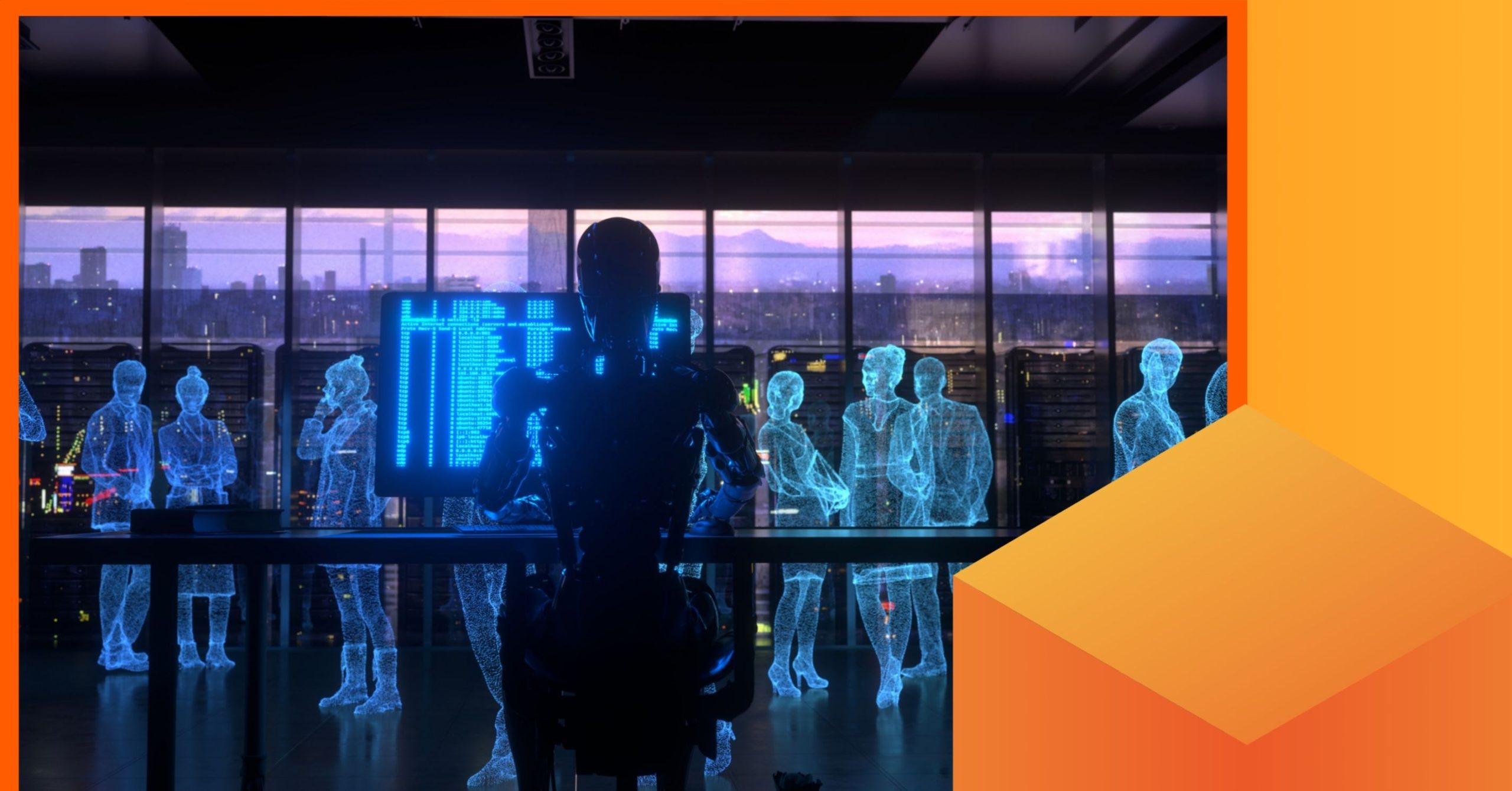

A $400 billion industry just hit the wall. The way out isn’t another platform — it’s a different posture toward learning itself.
The state of play by the numbers
- $400B — Annual global spend on corporate learning & development. (Josh Bersin, 2026)
- 74% — Of companies admit they are not keeping up with their own demand for new skills. (Bersin L&D Study, 2026)
- 59% — Of enterprise leaders report a measurable AI skills gap in their workforce. (DataCamp, 2026)
- 146% — Year-over-year surge in adoption of AI-personalized workplace learning. (IDC / Skillsoft, 2026)
The problem: The course catalog is broken.
For thirty years, the operating model of corporate learning has barely changed. A central team commissions content. The content is loaded onto an LMS. Employees are assigned modules. They click through, take a quiz, receive a certificate, and forget most of what they saw within a month. The Ebbinghaus forgetting curve has been doing its job since 1885, and the modern enterprise has built a $400 billion industry that ignores it.
That model is now finally collapsing — not because anyone hated it, but because the half-life of skills has fallen below the cycle time of producing a course. By the time a six-month curriculum on a new framework, regulation, or AI tool has been scoped, written, reviewed, localized, and deployed, the underlying topic has already shifted. Three-quarters of L&D leaders now openly say they cannot keep pace.
Into that vacuum arrives a strange phrase: Vibe Learning. It rhymes deliberately with vibe coding, the term Andrej Karpathy used to describe building software by intent rather than by syntax. Where vibe coding asks “what do I want this software to do?” and lets the model handle the rest, vibe learning asks “what do I want to understand?” and lets an AI partner shape the path. The learner stops being a recipient of curriculum. They become an architect of their own understanding.
For enterprises, this is not a pedagogical curiosity. It is a strategic inflection point.
The V.I.B.E. framework, in plain terms.
The phrase comes from educator Laurence Lars Svekis, who organized it as four interlocking postures the learner adopts when working with an AI partner. None of them are technical. All of them describe a stance.
V — Vision
Define the destination, not the directions. A clear “why” replaces a syllabus. The learner names the outcome — close a sales call, debug a contract, brief a board — and the AI partner shapes the route. Without vision, AI becomes a search engine. With it, AI becomes a tutor.
I — Intuition
Follow the productive tangent. Curiosity is a feature, not a distraction. The learner trusts unexpected questions and the AI handles the digression without losing the thread. The result is learning that feels like thinking — because it is.
B — Bricolage
Weave knowledge from many threads. Bricolage — French for “tinker” — is the act of stitching insight from scattered sources. The AI is the librarian; the human is the editor. Critical thinking lives in the seams between summaries.
E — Exploration
Treat AI as a low-stakes sandbox. Role-play the difficult performance review. Stress-test the regulatory scenario. Try, fail, retry — without the consequence. Practice, not assessment, becomes the dominant mode of learning.
Why this is hitting now.
Three forces collided in 2025–26 to make Vibe Learning unavoidable for serious enterprises.
1. The skill half-life has collapsed.
Gartner now projects that 80% of the engineering workforce will need substantive upskilling by 2027. McKinsey reports that 32% of companies expect AI to reduce their workforce by at least 3% within the year. The work isn’t going away — it’s mutating faster than any course catalog can chase. Static training cannot meet a moving target.
2. The economics of “build vs. buy” flipped.
By 2026, organizations save 70–92% on filling specialized roles by upskilling existing staff rather than hiring externally. Companies that prioritize internal development show 218% higher income per employee. The case for learning is no longer a cost center argument — it’s a margin argument.
3. AI made personalization actually feasible.
For two decades, “personalized learning” meant a recommended-courses widget. In 2026, it means an AI that has read your role description, watched your performance signals, ingested your company’s playbooks, and sat beside you while you worked. AI personalized learning surged 146% in a single year for one reason: it finally works.
Old learning, new learning.
A side-by-side of how the operating model shifts when an enterprise moves from a course-centric to a vibe-centric posture. Same outcomes. Wholly different mechanism.
|
Dimension |
Traditional L&D |
→ Vibe Learning |
|
Unit of delivery |
Course, module, certification |
Conversation, scenario, just-in-time prompt |
|
Pacing |
Cohort schedule, fixed duration |
Learner-driven, infinitely flexible |
|
Personalization |
Recommended catalog tiles |
Adaptive content tuned to role, gap, context |
|
Locus of control |
L&D function decides what is taught |
Learner decides what to understand; L&D enables |
|
Assessment |
Quizzes, certifications, completion rates |
Demonstrated capability in simulated and real work |
|
Where it happens |
In a separate “training” environment |
In the flow of work, inside the tools people already use |
|
Time to value |
Months from need to deployed module |
Minutes from question to working answer |
Four ways AI actually shows up as a learning partner.
Vibe Learning isn’t one technique — it’s four distinct relationships with an AI co-pilot. Mature enterprise programs cultivate all four, often in the same week, often inside the same conversation.
Mode 01 / Socratic — AI as thinking partner.
The model doesn’t deliver answers — it asks the next question. The learner explains a concept; the AI surfaces the gaps. This is the Feynman technique, automated.
In practice: “Here’s how I’d brief the board on our AI strategy. Where am I oversimplifying? What would a skeptical CFO push back on?”
Mode 02 / Synthesis — AI as intuitive researcher.
A synthesis engine for information overload. Three articles, three perspectives, three minutes — and a prompt for “what are the recurring arguments?” turns reading into thinking.
In practice: “Find me three takes on the new SEC AI disclosure rule — bullish, bearish, neutral. Summarize each in 50 words. Then tell me which assumptions they all share.”
Mode 03 / Co-Pilot — AI as project co-pilot.
For larger goals — fluency in a new technical domain, mastery of a regulated process — the AI plans, sequences, drills, and grades the journey. The learner sets ambition; the model handles structure.
In practice: “I want to be conversational in our new compliance framework in six weeks at four hours a week. Build me a plan with weekly checkpoints and daily 20-minute scenarios.”
Mode 04 / Mirror — AI as metacognitive mirror.
The least obvious mode and arguably the most powerful. The model reflects back the learner’s own patterns — preferred analogies, repeated blind spots, where they ask versus when they assume.
In practice: “Look at the last twenty conversations I’ve had with you. What kinds of questions am I avoiding? Where do I default to surface answers?”
“You can automate production. You cannot outsource cognition.”
— Kristen Budd, Synthesia AI in L&D Report, 2026
A five-stage roadmap for the enterprise rollout.
Most failed AI-in-L&D programs share the same flaw: they begin with tooling. The teams that succeed begin with policy, then capability, then experience. This is the sequence that holds up.
1 ◦ Q1 — Diagnose · AI readiness audit. Map skills, governance, culture, platform. Don’t assess the enterprise — assess L&D itself.
2 ◦ Q1–Q2 — Policy · Minimum-viable AI policy. What data can be used, what cannot, who approves PII handling. Build it with Legal and InfoSec first.
3 ◦ Q2 — Pilot · Two or three high-confidence use cases. Sales objection role-play. Compliance tutoring. Onboarding co-pilot. Don’t boil the ocean.
4 ◦ Q3 — Scale · Embed in the flow of work. Stop sending people to a “training site.” The AI partner lives where the work lives.
5 ◦ Q4 — Measure · Capability, not completion. Internal mobility, time-to-proficiency, demonstrated skill — the new metrics. Completion rates die.
Three risks the quiet enterprises are watching.
Enthusiasm for AI in learning is not the issue. Discipline about its failure modes is. The mature programs we surveyed worry about three specific patterns.
Cognitive offloading.
If the model thinks for the learner, the learner stops thinking. 95% of college faculty in a 2026 AAC&U survey worry about exactly this. The fix is design: AI must ask more than it answers, and grade the explanation, not the output.
Personalization at the cost of breadth.
Tightly tuned recommendations can collapse into echo chambers — comfortable, narrow, blind. The discipline: keep the catalog browsable. Personalization should improve choice, not eliminate it.
Governance debt.
59% of L&D teams avoid using personal data with AI because oversight is unclear. As personalization deepens, that gap becomes the binding constraint. Privacy, audit, and approval flows must lead the rollout — not trail it.
The enterprise that owns its own curiosity.
The deepest implication of Vibe Learning isn’t pedagogical, and it isn’t technological. It’s organizational. For decades, the L&D function has operated as a publisher — sourcing content, deploying it, measuring whether people consumed it. The Vibe Learning enterprise reorganizes around a different premise: the function’s job is no longer to own learning, but to enable it.
That shift is captured cleanly in the Bersin Corporate Learning Maturity Model, whose four levels run from Static Training through Scaled Learning through Integrated Development to Dynamic Enablement. Most enterprises are stuck at level two. The leap to level four — where learning, work, and knowledge management collapse into the same surface — is what AI finally makes possible.
The companies that get this right will look strange to companies that don’t. They will have smaller content teams and larger capability-platform teams. They will measure internal mobility and time-to-proficiency, not seat hours and CSAT. They will hire L&D leaders with backgrounds in product and data, not training. They will treat their LMS as legacy infrastructure — useful for compliance, irrelevant for capability.
The companies that get this wrong will keep buying course libraries. They will keep running Q1 strategy offsites about “the future of learning.” They will keep watching their best people leave for organizations that took curiosity seriously as an asset class.
The vibe is the strategy. The strategy is to put a brilliant, patient, infinitely-available thinking partner next to every employee, every day, on every problem they care about — and then trust them to do the rest.
The age of the assigned course is ending. The age of the architecturally curious enterprise is beginning.
“The real differentiator won’t be which AI capabilities you turn on. It will be whether your learning strategy is equipped to support a workforce that needs to build skills faster, apply judgment in new ways, and move more fluidly as roles continue to change.”
— Intellum, AI in L&D 2026
Sources & Further Reading
- Josh Bersin Co. — How AI Transforms $400B of Corporate Learning (Feb 2026)
- DataCamp — State of Data & AI Literacy Report (2026)
- Synthesia — AI in L&D Report (2026)
- IDC / Skillsoft — Workplace AI Learning Surge Analysis (2026)
- Florencio & Prieto — Vibe Learning, Education in the Age of AI (arXiv:2511.01956)
- Svekis, L. — The V.I.B.E. Framework (basescripts, 2025)
- LinkedIn — Workplace Learning Report (2025)
- World Economic Forum — Future of Jobs Report (2025)
Definitions
Vibe Learning — An AI-partnered learning posture in which the learner sets vision and intent and the model handles synthesis, drilling, and reflection.
V.I.B.E. — Vision, Intuition, Bricolage, Exploration. The four postures of the vibe learner.
Dynamic Enablement — The fourth and most mature stage of corporate learning — where work, knowledge, and skill-building converge.