
Helen Tanner is Founder and CEO of DATA³, having launched the business in 2017. Much of her time is spent talking to leaders who are cautious about AI: who want oversight, and worry about losing control of tone, accuracy, or their brand’s voice. In this piece, Helen makes the case that this instinct is right, but not always for the reasons leaders assume, and what “human in the loop” should actually mean in practice.
We work with business leaders all the time, and one phrase keeps coming up: “We want a human in the loop.”
When we dig into why, the honest answer is usually a mix of fear and control. Fear that AI will embarrass the business in front of a customer. Control, because leaders feel responsible for every word that goes out the door.
Both instincts are reasonable. We think they point towards something better than caution alone.
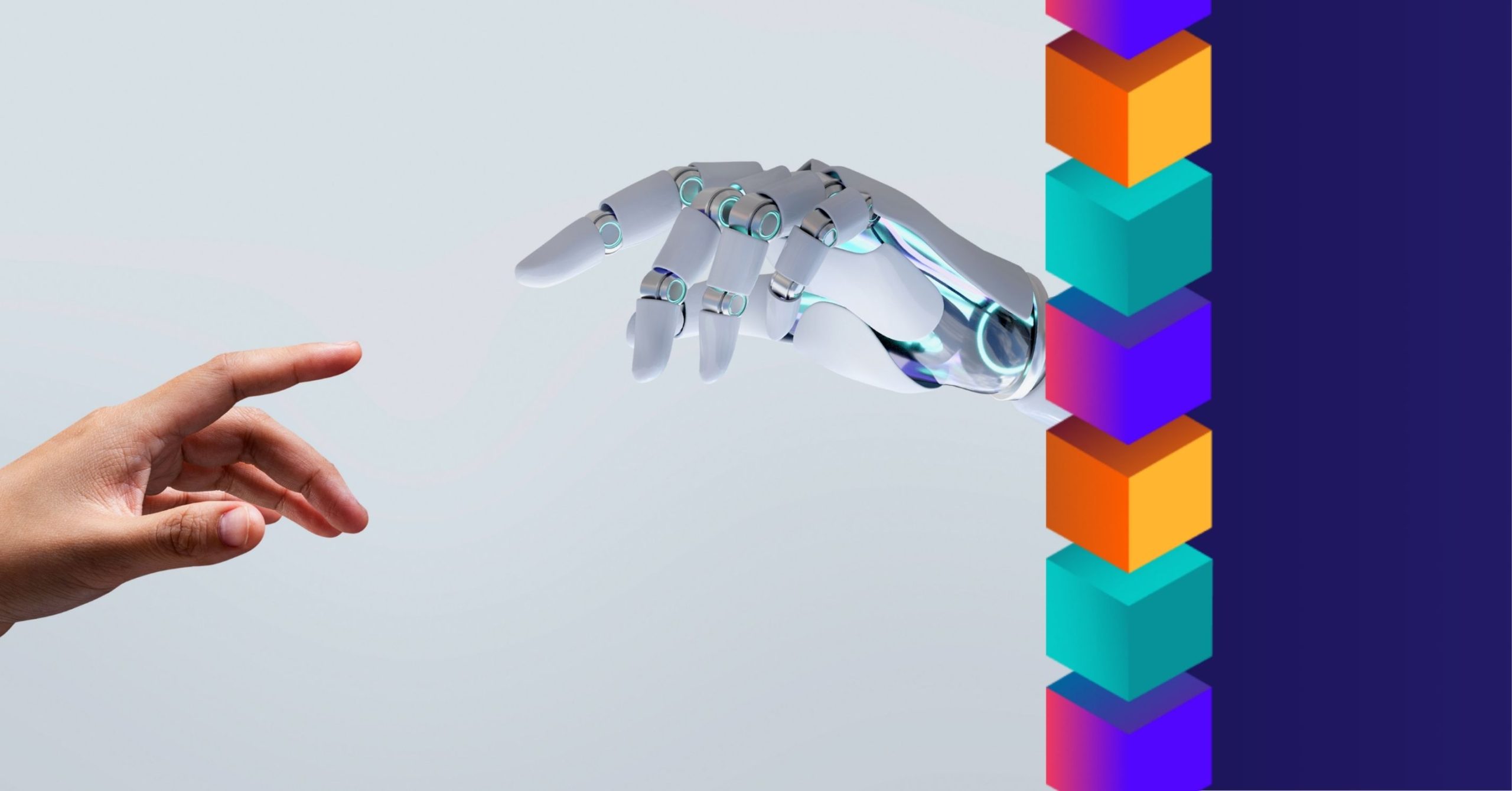
Our position is simple: AI-powered humans are the way to go. People who use AI to move faster, supported by judgement that AI cannot supply. This article explains why we hold that view, and what it means for how you run your business.
Where the Fear Comes From
Leaders rarely say “I’m afraid” in a meeting. They say things like “we need oversight” or “we can’t have that going to clients unchecked.”
Underneath sits a real concern. AI produces work with total confidence, whether the work is right or wrong. It never hesitates. It never flags its own uncertainty in a way you can trust.
That confidence is the problem.
Tip: treat confidence and accuracy as two separate things when you review AI output. They are unrelated.
The fear of losing control is a signal worth listening to. It tells you where your quality standards live and who currently protects them. The answer, in almost every business we work with, is a person.
AI Behaves Like an Overly Confident Intern
Here is the analogy we use constantly, because it lands every time.
AI behaves like an overly confident intern.
Bright, fast, tireless, and completely certain about things it gets wrong. It will draft the report, answer the customer, and summarise the contract, all before lunch. Some of that work will contain errors it presents with the same certainty as its best output.
Now think about how you treat an actual intern.
- You give them clear briefs.
- You check their work before it reaches a customer.
- You coach them when they get things wrong.
- You expand their responsibility as they earn trust.
No sensible leader lets an intern do whatever they want on day one. The same logic applies to AI. We should check and coach AI the way we check and coach junior people.
Warning: unreviewed AI output in customer-facing channels is the most common failure we see. One confident wrong answer costs more trust than a hundred correct ones build.
The intern framing also changes the emotional temperature of the conversation. Leaders stop asking “how do we stop AI” and start asking “how do we manage AI.” Management is a skill your organisation already has.
Your Customers Are Human, Which Changes Everything About Service
The second reason for keeping humans in the loop has nothing to do with AI’s flaws. It has to do with your customers.
Most businesses have a human component built into their offering, usually in sales, customer service, or both. Those functions exist because buying decisions and service moments are emotional.
Human beings are emotional, sometimes irrational, and they carry individual needs that can be real or simply perceived. From the customer’s point of view, a perceived need feels identical to a real one.
That means they expect a tailored response, one shaped by someone who reads tone, picks up hesitation, and adjusts on the spot.
Consider a customer who calls to cancel a contract. On paper the request is simple. In reality they are frustrated about a delivery issue from three weeks ago, worried about looking bad to their own boss, and half hoping someone talks them out of it.
A person hears all of that in the first thirty seconds.
An AI system processes the cancellation.
The gap between those two outcomes is where revenue lives. Empathy, timing, and the ability to bend a rule when it matters remain human strengths, and your customers notice when they are missing.
Why AI Belongs in the Loop Too
Everything above argues for humans. Here is the other half of the case, and it matters just as much.
AI makes you faster
The most immediate value of AI is efficiency. It automates manual tasks that used to take hours or days.
Drafting proposals. Summarising long email threads. Preparing first versions of reports. Pulling patterns out of customer feedback. These tasks consumed skilled people’s time, and AI now handles the first pass in minutes.
Your people then spend their hours on the work that actually needs them: judgement calls, relationships, and decisions with consequences.
AI checks your work
This benefit is commonly overlooked, and we think it deserves far more attention.
Humans miss things. We get tired, we skim, we assume. AI is superb at catching what we skip: the inconsistency on page twelve, the number that fails to match the appendix, the clause everyone read past.
Used this way, AI becomes a second pair of eyes that never gets tired and never gets bored.
Tip: run your important documents through AI review before they go out. Ask it to find inconsistencies, gaps, and unclear passages. It will find things you missed.
Notice the symmetry here. Humans check AI’s confidence. AI checks human oversight. Each covers the other’s blind spot.
What AI-Powered Humans Look Like in Practice
The phrase “human in the loop” undersells what we actually recommend. A human in the loop sounds like a safety measure bolted on at the end. AI-powered humans describes a working relationship.
In practice, it looks like this:
- AI produces the first draft. Reports, responses, analyses, summaries. Speed is its job.
- A person reviews, corrects, and coaches. They fix errors and refine prompts and instructions so the next draft improves.
- The person owns anything a customer touches. Emotional moments, negotiations, and complaints stay with humans, supported by AI research and preparation.
- AI reviews the human’s final work. A last check for gaps and inconsistencies before anything ships.
The coaching step is where most organisations fall short. They review AI output once, spot errors, and conclude the tool is unreliable. An intern treated that way never improves either. Feedback loops make both interns and AI systems more useful over time.
This model also answers the workforce anxiety that sits underneath many AI conversations. Roles shift towards oversight, coaching, and complex problem-solving. The judgement your experienced people carry becomes more valuable, because it now directs a much faster production engine.
Our Bottom Line
The leaders who ask for a human in the loop are right. We simply want them to be right for better reasons than fear.
Keep humans in the loop because AI behaves like a confident intern and needs checking and coaching. Keep humans in the loop because your customers are emotional beings who expect tailored treatment.
Keep AI in the loop because it makes your people dramatically faster and catches the things they miss.
AI-powered humans outperform both AI alone and humans alone. That is the model we back, and it is the one we see working in real businesses right now.
Check the work. Coach the tool. Keep people where people matter. Let AI handle the rest.
Start small this week. Pick one manual task your team repeats, hand the first draft to AI, and keep a person on review. You will learn more from that one loop than from another quarter of debate.
If your team handed AI’s first draft to a customer tomorrow, unchecked, would you trust what went out the door? Book a consultation with DATA³ and let’s build the review loop that lets you trust it.